I Thought My Alloy Wheel Supplier Was the Problem. It Wasn't.
· Jane Smith
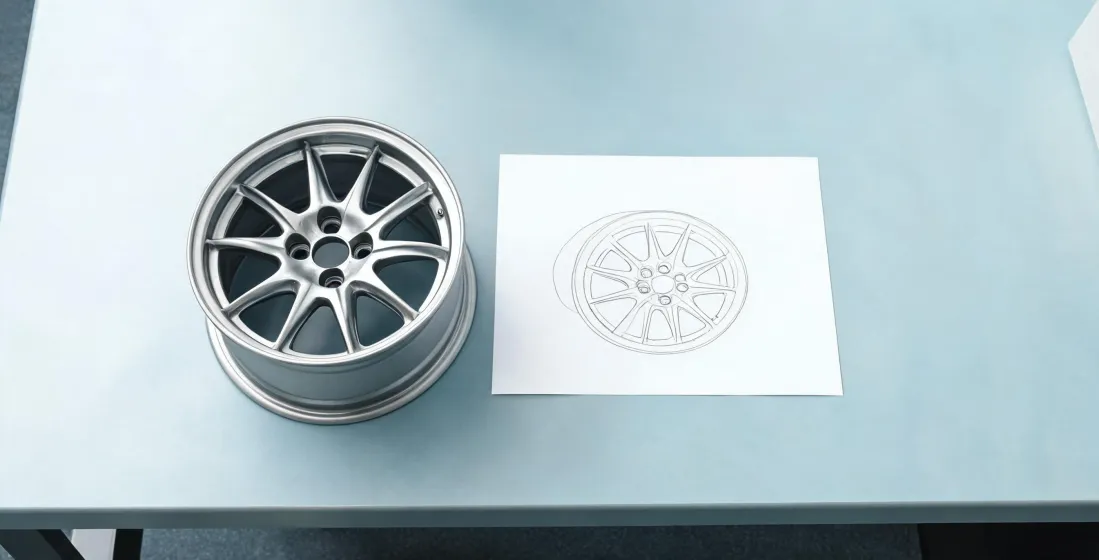
I've spent six years handling alloy wheel sourcing orders. First on the buyer side at a distributor, now supporting B2B customers at Ronal. I've personally made — and documented — about seven significant mistakes, totaling roughly $7,400 in wasted budget. I now maintain our sourcing team's pre-check list so other buyers don't have to learn the way I did.
The $3,800 order I thought was a supplier problem
In March 2019, I placed our first alloy wheel order from a Chinese supplier: 100 pieces of 17-inch black alloy wheels, roughly $3,800. I picked them because they were the lowest quote I'd gotten. The wheels arrived, and about a third wouldn't fit the vehicles we'd specified. The ET value was off by 8mm.
I blamed the supplier. Switched to a new one.
The second order — 120 pieces, $4,200 — had beautiful samples. The production batch didn't match. Surface finish on 35% of the wheels was visibly different (lighter, almost matte instead of gloss black). I blamed the factory again.
By early 2021, I'd been through three suppliers and was starting to think the problem was structural. Not "bad factories" — something about the way I was buying.
The real problem wasn't the supplier. It was what I was verifying.
It took me about four years to see the pattern. The problem with what alloy wheels sourcing actually involves is that most buyers — including 2019 me — treat it like buying from a catalog. Check the price. Check the sample. Place the order.
That's not what alloy wheel sourcing is. It's a verification process. And I was verifying the wrong things at every step.
1. I was verifying the catalog, not the production capability
The wheels in the catalog looked perfect. The supplier listed themselves as an alloy wheels supplier with a full product catalog, certifications, and polished photos. What I didn't check: whether the factory that made the sample was the same factory that would produce my order. Spoiler: it often isn't. Many alloy wheels suppliers in China — and elsewhere, to be fair — operate through a broker model. The sample might come from one factory, your production run from another.
Everything I'd read said "always check the factory." In practice, I found the more useful question is: "Was the sample produced in the same facility and on the same equipment as my order?" If the supplier can't produce a batch traceability number for the sample, you're verifying a demo, not production.
2. I was verifying the price, not the landed cost
My cheapest quote at $32 per wheel ended up costing more than a $36 quote from a different supplier — by about $2.30 per unit. How? The $32 didn't include mold amortization, upgraded surface treatment (gloss black isn't standard), seaworthy packaging, or the FOB-to-CIF freight difference. Each added between $0.40 and $0.90 per unit.
To be fair, none of those were hidden. They were in the quote — just spread across three sections I'd skipped past because my eyes were locked on the unit price. That was on me.
I've learned to ask "What's NOT included?" before "What's the price?" The vendor who lists all fees upfront — even if the total looks higher — usually costs less in the end. That's not a theory. I've tracked it across about 40 RFQs since 2022.
3. I was verifying the sample, not the consistency
A sample shows what a factory can do once, with extra attention. It doesn't show what they'll do at scale. The color mismatch on my second order happened because surface treatment is a separate process. The sample was hand-finished and approved. Production went through the standard line with different curing times and a different paint batch.
Now I ask: "Can you send photos of three units from three different production batches of this exact model?" That's a much better predictor of consistency than one polished sample.
What these mistakes actually cost
Let me put numbers on the pattern:
- 2019: 100 wheels, $3,800, plus $640 in local re-machining plus a 3-week delay. The customer cut their next order from 500 to 200 units.
- 2020: 120 wheels, $4,200. 35% had the surface finish issue. $1,470 in unsellable units, $420 in partial rework, two weeks of apologies.
- 2021: A $2,900 order my customer rejected entirely because the IATF 16949 certificate the supplier provided had expired 18 months earlier. I only found out when the customer's compliance team checked the certificate number in the IATF database. I ate the $580 return freight.
Direct losses: roughly $7,400. The bigger cost was the time I spent cycling through suppliers instead of building a process. I'd estimate another $6,000 in opportunity cost from orders I couldn't chase during those cycles.
I saved $400 by choosing the cheaper quote. Then I spent $2,100 on the mistakes that followed.
What I do now — a 15-minute pre-check that saves hours of cleanup
After the third rejection in Q1 2021, I built a pre-check list for our team. We've caught 23 potential issues with it in the past 18 months. The core is three questions I now ask every alloy wheels supplier — including Ronal alloy wheels sourcing conversations when we evaluate new partners or support buyer-side RFQs:
- "Is the sample from a production batch, and can you provide the traceability number?" If they can't, the sample is a demo. Treat it accordingly.
- "What's NOT included in this price?" Most suppliers will list 4-6 items. Add them up. Compare landed costs, not unit prices.
- "If the spec is off, who covers rework or return, and on what timeline?" Get this in writing. If the supplier dodges the question, that's your answer.
On certifications — which matter more than ever for OEM and aftermarket B2B buyers — don't trust the PDF alone. Check the certificate number on the issuing body's registry (IATF for 16949, the relevant certification body for TÜV, JWL, or VIA marks). Confirm the expiration date, the scope, and whether it covers the specific product category you're sourcing.
Where to find alloy wheels suppliers in China isn't the hard part anymore. Trade shows, B2B platforms, referrals — they're everywhere. The hard part is verifying that the supplier you're talking to is set up to deliver at the consistency and documentation level your buyers require.
After six years of this, I've come to believe Ronal alloy wheels supplier relationships — or any supplier relationship, really — aren't built on finding someone you can trust. They're built on a process that doesn't require blind trust in the first place.
The supplier matters. But the process matters more. I learned that the expensive way — seven times, $7,400, and one very patient manager.

I’m Jane Smith, a senior content writer with over 15 years of experience in the packaging and printing industry. I specialize in writing about the latest trends, technologies, and best practices in packaging design, sustainability, and printing techniques. My goal is to help businesses understand complex printing processes and design solutions that enhance both product packaging and brand visibility.